01 / Paper 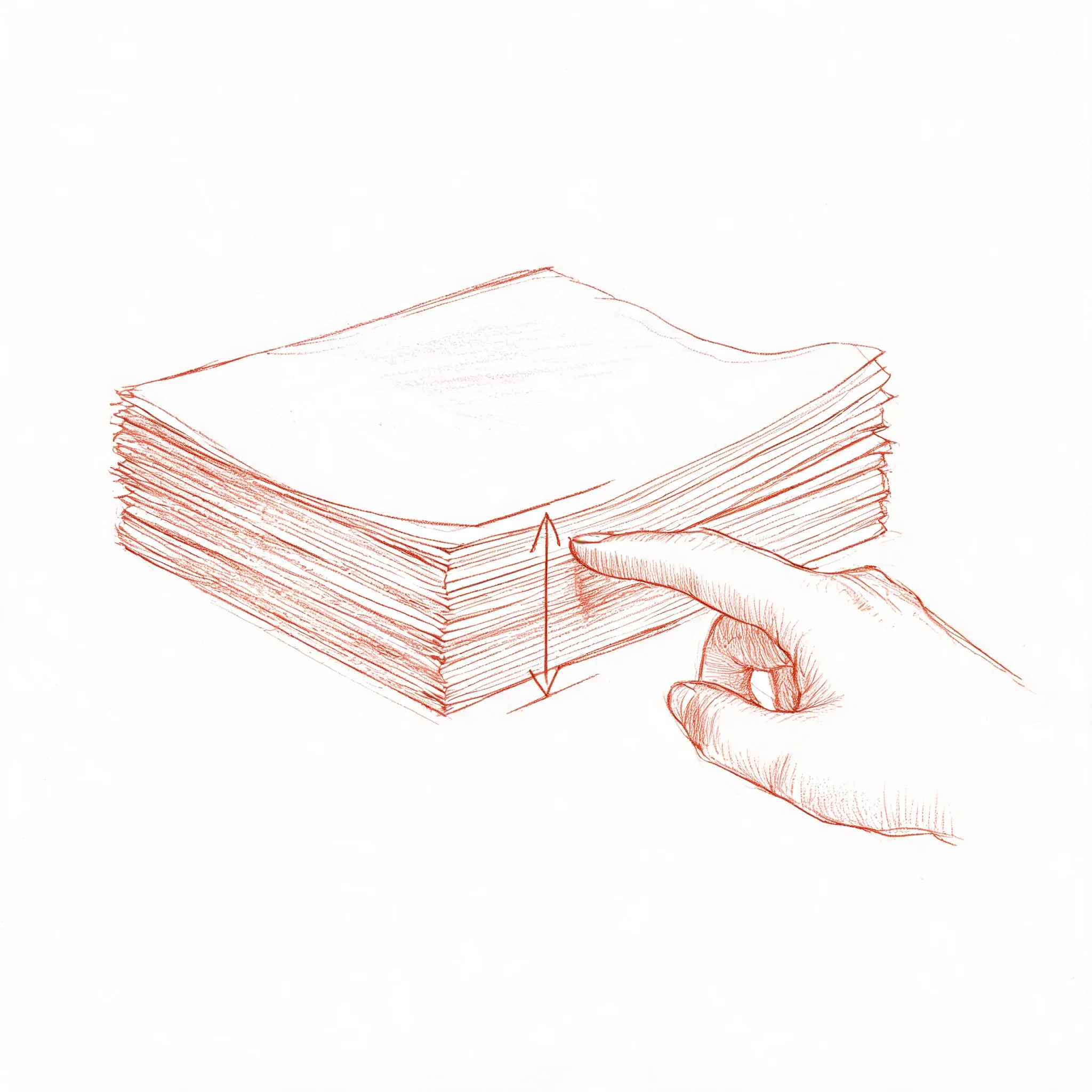
Thin, opaque, quiet
28 · 33 · 36 · 40 gsm
India and Bible paper in four weights. Opaque enough that two columns never show through, thin enough that 1,800 pages close to 38 mm.
A Bible is read daily, carried weekly, and kept for a generation. We bind it the way that demands — Smyth-sewn, thin-paper, and built to lie open in the reader's hands.
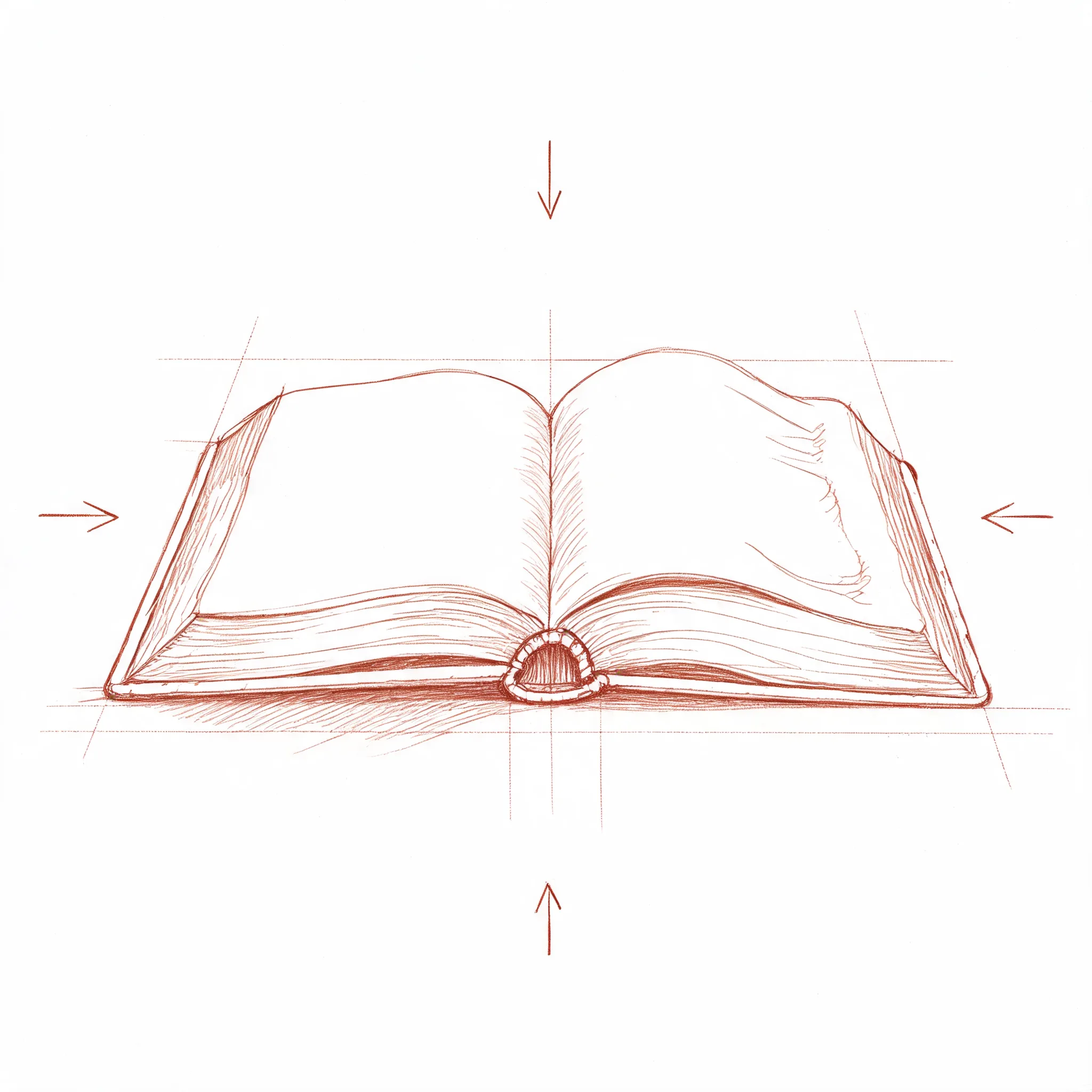
Designer's noteEvery edition starts as a sketch like these — paper, thread, gold, and ink, decided before a single sheet is printed.
India and Bible paper in four weights. Opaque enough that two columns never show through, thin enough that 1,800 pages close to 38 mm.
Sections are folded and thread-sewn through the fold, then rounded and backed. The book opens flat at any page — Genesis or Revelation — without breaking the spine.
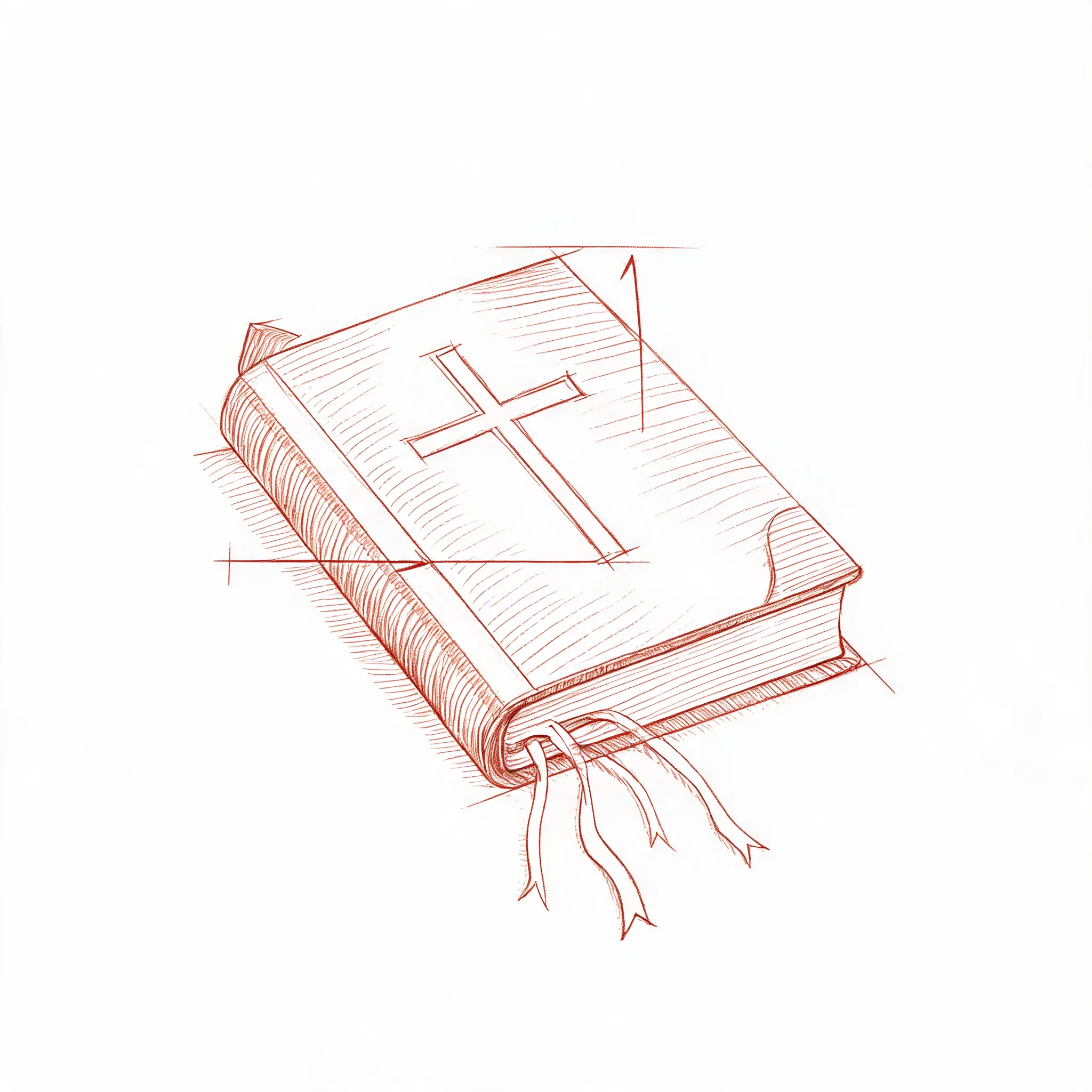
Gilded or stained page edges, full or semi-yapp covers that fold over the block, and up to eight ribbon markers in liturgical colors.
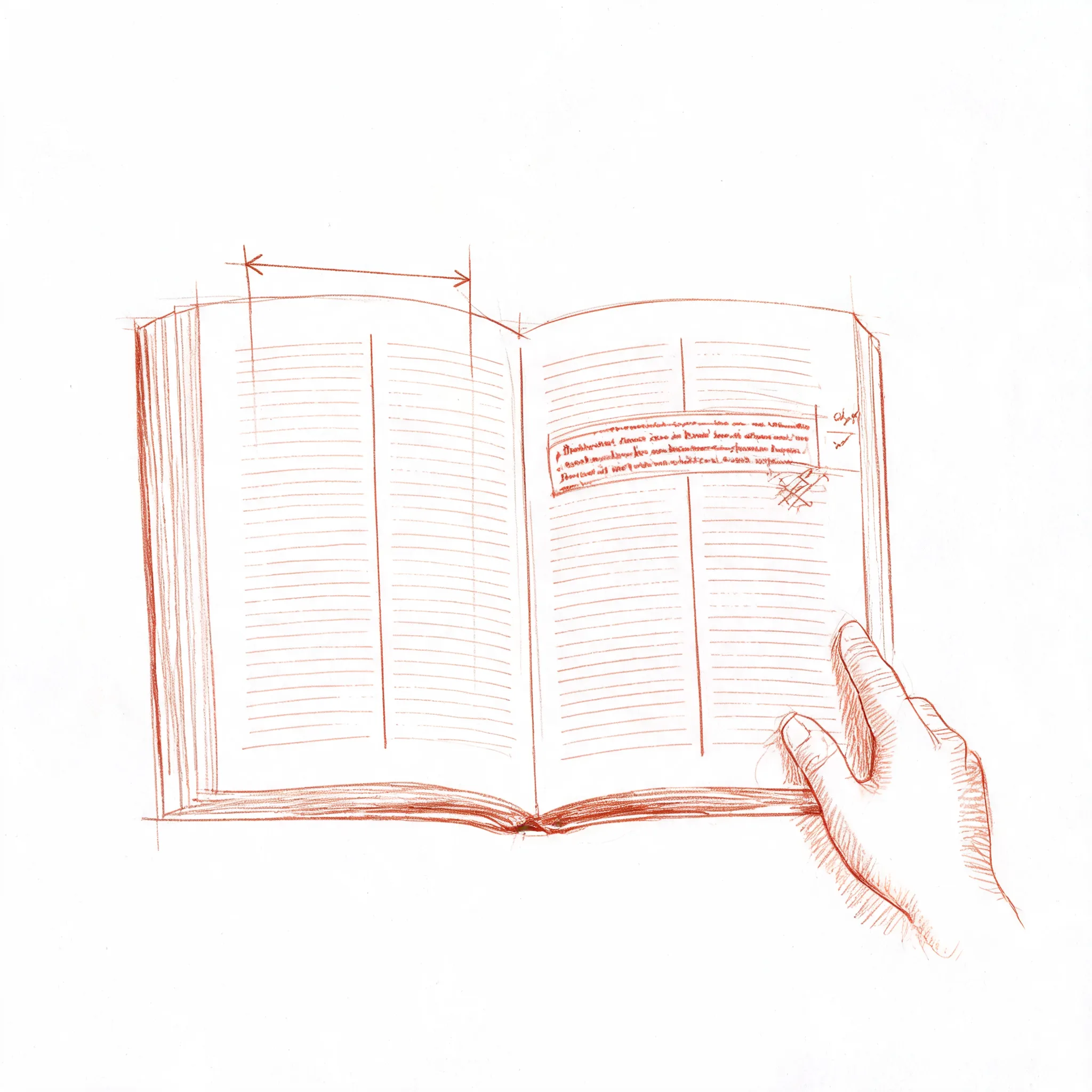
Words of Christ in a second red pass, registered to ±0.1 mm. Cross-references, footnotes, and concordances set in 6.5pt without clogging.
Margin noteSeven families of scripture work, each with its own paper, binding, and finish. Pick the one closest to yours.
Goatskin or bonded leather, gilded edges, presentation pages, boxed. Built for weddings, confirmations, and first communions.
Durable buckram or PU covers, 33–36gsm paper, priced for congregational runs of 500 and up.
Wide margins, cross-reference apparatus, maps on coated inserts — up to 2,500 sewn pages in one volume.
Rubricated two-color printing throughout, lay-flat binding for the lectern, ribbons in liturgical sets.
Music notation at 1200dpi, reinforced hinges for decades of weekly use by a full choir loft.
Pocket formats down to 70×100mm, padded covers, gilt or stained edges — small books, same sewn binding.
For procurementYou've specced scripture before. Here's the capability table — if it fits, send the PO.
| Decision | Range | Typical use |
|---|---|---|
| Bible paper | 28 gsm | Compact & pocket Bibles, maximum page count |
| Bible paper | 33–36 gsm | Standard text and pew editions |
| Bible paper | 40 gsm | Study Bibles, better opacity for heavy annotation |
| Binding | Smyth sewn | All editions — 180° lay-flat, library-grade life |
| Block size | up to 2,500 pp | Single-volume complete reference editions |
| Cover | PU / bonded / goatskin | Pew → premium gift, graded by run budget |
| Edges | Gilt · stained · plain | Gilt under foil for gift; stained for pew economy |
| Printing | 1–2 color | Black text; second pass for red-letter / rubrication |
We confirm translation copyright and print licenses before quoting — NIV, ESV, KJV, RSV-CE and others.
Liturgical and canon texts are reproduced exactly as approved. No reflow, no re-editing, ever.
KJV and other public-domain texts flagged clearly, so you know what you can print where.
Overruns and spoiled sheets of scripture are pulped under supervision — never sold as scrap.
What happens nextYou send the trim size, page count, and translation. We reply within one business day with a paper recommendation, a binding spec, and a price — plus a paper dummy if you want to hold it first.